






Great site to keep my english skills updated for work and travel. I am really enjoying the lessons!
Maria C
 Argentina


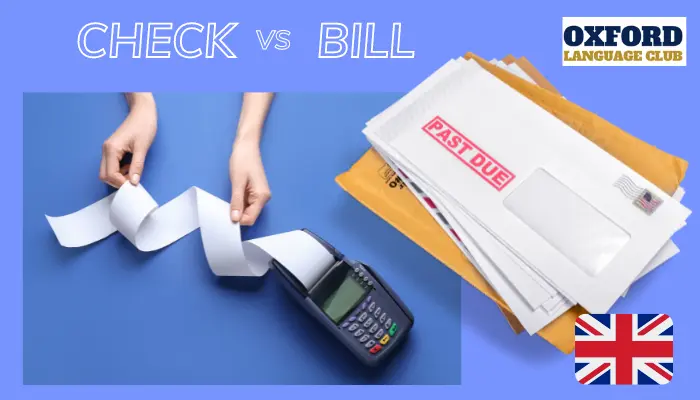
When learning English, the difference between "check" and "bill" can be confusing because these words often seem to mean the same thing. In American English, "check" is commonly used in restaurants to refer to the piece of paper that shows what you owe for your meal. For example, after eating at a restaurant, you might ask the server, "Can I have the check, please?"
On the other hand, in British English, "bill" is used in the same context. So, in the UK, you would say, "Can I have the bill, please?"
Additionally, "bill" has a broader usage in both American and British English, referring to any statement of charges, like an electricity or phone bill. Meanwhile, "check" can also mean to examine something or to stop something. Understanding these nuances can enhance your English comprehension and help you communicate more effectively in different regions.
Junio, 2024
Publicado por Oxford Language Club
Verifique su puntaje: pruebe nuestro cuestionario de inglés gratuito + obtenga un bono gratis

Great site to keep my english skills updated for work and travel. I am really enjoying the lessons!
Argentina

Loved the course. Abitlity to improve my grammar and spelling in a step by step method has really helped me. Thanks!
 Francia