







Great site to keep my english skills updated for work and travel. I am really enjoying the lessons!
Maria C
 Argentina


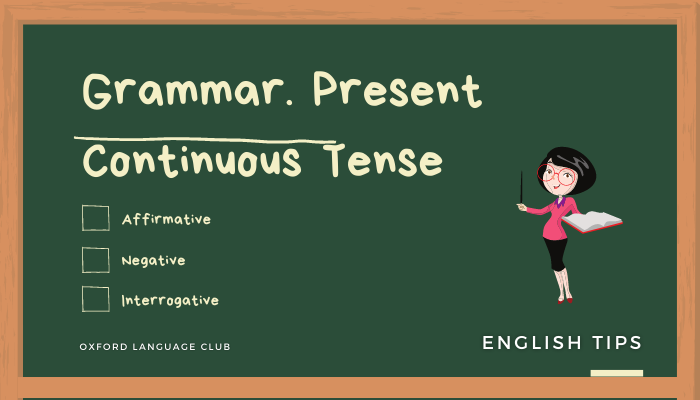
Formando el Present Continuous
Present Continuous de cualquier verbo se compone de dos partes: the present tense of the verb to be + the present participle of the main verb.
(La forma del Present Participle es: base+ing, e.g. talking, playing, moving, smiling)
| Affirmative | ||
| Subject | + to be | + base + ing |
| She | is | talking. |
| Negative | ||
| Subject | + to be + not | + base + ing |
| She | is not (isn't) | talking |
| Interrogative | ||
| to be | + subject | + base + ing |
| Is | she | talking? |
Ejemplos: TO GO, Present Continuous
| Affirmative | Negative | Interrogative |
|---|---|---|
| I am going | I am not going | Am I going? |
| You are going | You aren't going. | Are you going? |
| He, she, it is going | He, she, it isn't going | Is he, she, it going? |
| We are going | We aren't going | Are we going? |
| You are going | You aren't going | Are you going? |
| They are going | They aren't going | Are they going? |
Nota: contracciones negativas alternativas: I'm not going, you're not going, he's not going etc.
Functions of the Present Continuous
Como ocurre con todos los tiempos en inglés, la actitud del hablante es tan importante como el momento de la acción o evento. Cuando alguien usa el presente continuo, está pensando en algo que está inacabado o incompleto.
The Present Continuous is used:

Verifique su puntaje: pruebe nuestro cuestionario de inglés gratuito + obtenga un bono gratis

Great site to keep my english skills updated for work and travel. I am really enjoying the lessons!
Argentina

Loved the course. Abitlity to improve my grammar and spelling in a step by step method has really helped me. Thanks!
 Francia